
Key Takeaways
- UVC Light Kills Mold, But Requires Direct Exposure: Ultraviolet C (UVC) light effectively damages the DNA and RNA of mold spores, preventing them from reproducing. However, it only works on surfaces that the light can directly reach and requires adequate exposure time.
- It Does Not Physically Remove Mold: While UV light can kill mold, it does not remove it. Dead mold colonies and spores will remain attached to surfaces and can still trigger allergies until they are physically cleaned or professionally removed.
- Ineffective Against Hidden Mold: UV light cannot penetrate walls, floors, or porous materials (like wood or drywall). If mold is growing in hidden areas or deep within materials, the UV light will not be able to treat it.
- Best Used for Prevention in HVAC Systems: Rather than treating existing mold infestations, UV light is most effective as a continuous preventive tool. It is commonly installed in HVAC systems to keep evaporator coils clean and reduce biological growth.
- Moisture Control is Still Essential: UV light cannot repair water damage or dry out wet areas. If the underlying moisture problem (like high humidity or leaks) is not fixed, mold will inevitably return, regardless of UV light usage.
Mold is one of the most common problems homeowners face, especially in areas with high humidity or past water damage. It can grow on walls, ceilings, furniture, carpets, and even inside HVAC systems. Once mold starts spreading, many people look for simple ways to remove it. One question that often comes up is, does ultraviolet light kill mold?
The short answer is yes, ultraviolet (UV) light can kill mold under the right conditions. However, there is much more to the answer than a simple yes or no. While UV light can damage mold cells and stop mold from growing, it is not always enough to completely solve a mold problem. The effectiveness depends on several factors, including the type of UV light, the amount of exposure, and where the mold is growing.
In this guide, you’ll learn how ultraviolet light works, when it is effective, its limitations, and whether it should be used as part of a complete mold control plan.
What Is Ultraviolet Light?
Ultraviolet light is a type of electromagnetic radiation that comes from the sun. Although people cannot see UV light with the naked eye, it plays an important role in nature and is widely used in many industries.
There are three main types of ultraviolet light:
UVA
UVA has the longest wavelength and reaches the Earth’s surface in the greatest amount. It is mainly responsible for skin aging and tanning but is not commonly used for mold control.
UVB
UVB has more energy than UVA and is responsible for causing sunburn. It also has some disinfecting properties but is not the primary choice for mold treatment.
UVC
UVC has the shortest wavelength and the highest energy. It is the most effective type of UV light for killing microorganisms, including bacteria, viruses, and mold spores.
Most commercial UV systems designed for mold prevention use UVC light.
How Does Ultraviolet Light Kill Mold?
To understand how UV light affects mold, it helps to know how mold grows.
Mold spreads by releasing tiny spores into the air. When these spores land on a damp surface with enough moisture and nutrients, they begin growing into mold colonies.
UVC light damages the DNA and RNA inside mold cells and spores. Once this genetic material is damaged, the mold cannot reproduce or continue growing normally.
In many cases, prolonged exposure to UVC light can kill mold spores or make them unable to spread.
This is why UV light is often used in hospitals, laboratories, and HVAC systems to reduce microorganisms.
Does UV Light Kill All Types of Mold?
Ultraviolet light can affect many common indoor mold species, including:
However, not every mold species responds the same way.
Some molds require longer exposure times than others, while certain spores are naturally more resistant.
The thickness of the mold colony also affects how well UV light works. Surface mold is generally easier to treat than deep mold growing inside porous materials.
Does UV Light Kill Mold Spores?
Yes, UVC light can damage mold spores.
Since spores are responsible for spreading mold throughout a building, reducing their ability to reproduce can help slow future mold growth.
However, dead spores can still remain on surfaces and in the air.
Even if the spores are no longer active, they may still trigger allergies or respiratory irritation in sensitive individuals.
For this reason, simply exposing mold to UV light is not always enough. Cleaning and removing contamination is still important.
Can UV Light Remove Existing Mold?
This is where many homeowners become confused.
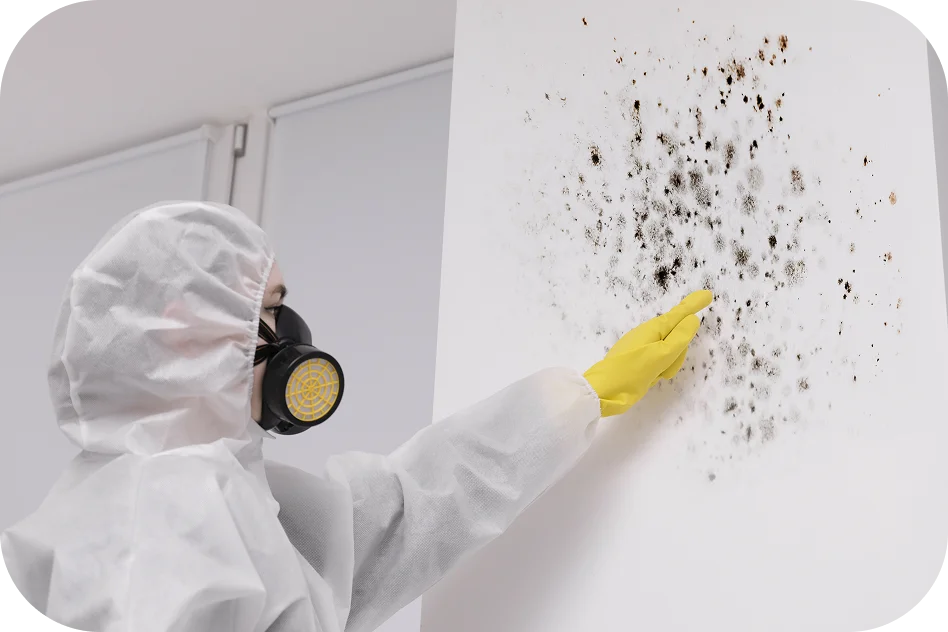
UV light may kill mold, but it does not remove mold.
Dead mold colonies remain attached to surfaces until they are physically cleaned or removed.
For example, if mold is growing on drywall, wood, or insulation, the dead mold still remains in place.
Professional mold remediation usually involves removing contaminated materials when necessary, cleaning affected surfaces, and correcting the moisture problem that allowed mold to grow.
How Long Does UV Light Take to Kill Mold?
There is no single answer.
Several factors determine how long UV light must remain on mold before it becomes effective.
These include:
- Distance between the UV lamp and the mold
- Strength of the UV light
- Type of mold
- Size of the mold colony
- Whether the mold is directly exposed
Some microorganisms may become inactive after only a few minutes of direct exposure, while larger mold colonies may require much longer.
If shadows block the UV light, the hidden mold may survive.
Does Sunlight Kill Mold?
People often assume that sunlight works the same way as UVC lamps.
While sunlight does contain ultraviolet rays, most of the natural UVC radiation from the sun is absorbed by the Earth’s atmosphere before reaching the ground.
This means direct sunlight may help dry damp areas and slightly slow mold growth, but it is generally not powerful enough to completely eliminate established indoor mold.
Drying moisture remains one of sunlight’s biggest benefits.
Where Is UV Light Commonly Used for Mold Prevention?
Rather than treating visible mold, UV systems are more commonly used to prevent mold from developing.
Some of the most common applications include:
HVAC Systems
Many heating and cooling systems use UVC lamps near evaporator coils.
These coils often remain damp because of condensation, creating ideal conditions for mold growth.
UV lights help keep these components cleaner by reducing mold buildup.
Air Handling Units
Large commercial buildings often install UV systems inside air handlers to improve indoor air quality and reduce biological growth.
Hospitals
Healthcare facilities frequently use UVC technology to reduce bacteria, viruses, and mold in controlled environments.
Commercial Buildings
Hotels, office buildings, schools, and industrial facilities sometimes install UV systems to improve HVAC cleanliness.
Can UV Light Reach Hidden Mold?
One major limitation of UV light is that it only works where the light actually reaches.
If mold is hidden:
- Behind drywall
- Under flooring
- Inside insulation
- Behind cabinets
- Inside wall cavities
UV light usually cannot reach it.
Hidden mold often continues growing because moisture remains trapped behind building materials.
This is one reason why professional mold inspections are so important after water damage.
Does UV Light Work Better on Surface Mold?
Yes.
Surface mold that receives direct exposure is much easier for UV light to affect.
Smooth surfaces like:
allow UV light to reach mold more effectively.
Porous materials like drywall, wood, carpet, and insulation are much more challenging because mold often grows beneath the surface where the light cannot penetrate.
Can UV Light Prevent Mold from Returning?
UV systems can reduce the chances of mold returning in certain situations.
For example, HVAC UV lights continuously expose damp components to UVC radiation, making it harder for mold to establish new colonies.
However, UV light alone cannot prevent mold if moisture problems remain.
Leaks, flooding, poor ventilation, or high indoor humidity will continue creating favorable conditions for mold growth.
Moisture control is always the most important step in mold prevention.

Is UV Light Safe?
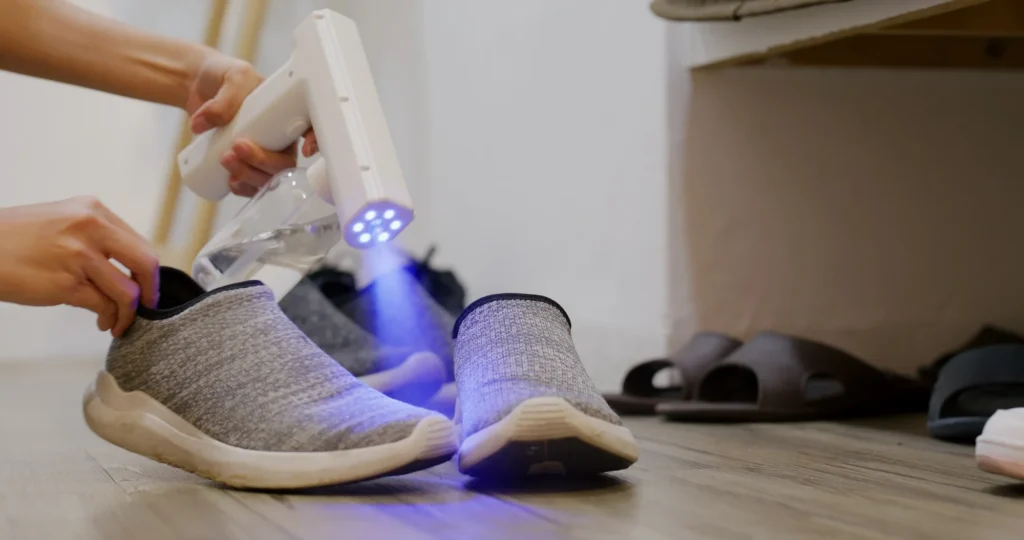
UVC light should never be viewed directly or allowed to contact skin during operation.
Exposure can cause:
- Eye irritation
- Skin burns
- Temporary vision problems
For this reason, most UVC systems are installed inside HVAC units or enclosed equipment where people are not directly exposed.
Portable UV devices should always be used according to the manufacturer’s safety instructions.
What Are the Advantages of UV Light for Mold Control?
Using UV light offers several potential benefits.
Chemical-Free Treatment
UV systems do not require chemical sprays or disinfectants.
Continuous Operation
Installed HVAC UV lamps work automatically whenever the system operates.
Reduced Mold Growth
Regular exposure helps reduce biological growth on HVAC components.
Improved Air Quality
Cleaner HVAC systems may contribute to better airflow and fewer airborne microorganisms.
Low Maintenance
Most UV lamps require only periodic replacement according to the manufacturer’s recommendations.
What Are the Limitations of UV Light?
Although useful, UV light is not a complete mold solution.
Some important limitations include:
- Only works where light reaches directly.
- Cannot remove dead mold.
- Cannot repair water damage.
- Does not eliminate moisture.
- Less effective on porous materials.
- Hidden mold remains untreated.
Understanding these limitations helps homeowners choose the right mold control strategy.
Should You Use UV Light Instead of Mold Remediation?
In most situations, no.
If mold is already growing inside walls, ceilings, or flooring, professional remediation is usually necessary.
UV light works best as a preventive tool rather than a replacement for proper mold removal.
For small areas of surface contamination, cleaning the mold safely and fixing the moisture source is generally more effective than relying only on UV light.
For larger mold problems, identifying the source of moisture should always come first.
When Should You Consider Professional Mold Testing?
Many homeowners try to solve mold problems on their own, but there are times when professional mold testing is the better choice.
You should consider a mold inspection if:
- You notice a persistent musty smell.
- Mold keeps returning after cleaning.
- Your home has experienced flooding or water damage.
- You see discoloration on walls or ceilings but are unsure if it’s mold.
- Someone in your home experiences allergy-like symptoms that improve when they leave the house.
- You’re buying or selling a property and want to know if hidden mold is present.
Professional mold testing can identify the type of mold, determine the level of contamination, and help locate hidden moisture that may not be visible.
How Professionals Detect Hidden Mold
Not all mold is visible. In many cases, it grows behind walls, beneath flooring, or inside HVAC systems.
Professional inspectors use different methods to find mold, including:
Moisture Meters
Moisture meters help detect excessive moisture inside building materials without causing damage.
Thermal Imaging Cameras
Infrared cameras can identify cooler areas that may indicate hidden moisture behind walls or ceilings.
Air Sampling
Air samples measure the concentration of mold spores inside a building. Comparing indoor and outdoor air samples helps determine whether mold levels are unusually high.
Surface Sampling
Inspectors may collect samples from visible mold growth to identify the mold species through laboratory testing.
These tools provide a much more complete picture than simply looking for visible mold.
Common Areas Where Mold Grows
Understanding where mold commonly develops can help homeowners catch problems early.
Some of the most common locations include:
Bathrooms
Steam from showers creates high humidity, making bathrooms one of the most common places for mold.
Kitchens
Leaks under sinks, around dishwashers, or behind refrigerators can lead to hidden mold growth.
Basements
Poor ventilation and occasional flooding make basements especially vulnerable.
Attics
Roof leaks and poor insulation can allow moisture to build up over time.
HVAC Systems
Condensation inside air conditioning systems provides an ideal environment for mold growth if not properly maintained.
Laundry Rooms
Washing machines, utility sinks, and water supply lines can all contribute to moisture problems.
How to Prevent Mold Naturally
The best mold prevention strategy focuses on reducing moisture.
Simple steps include:
- Fix plumbing leaks as soon as possible.
- Repair roof leaks promptly.
- Keep indoor humidity below 50%.
- Use exhaust fans in bathrooms and kitchens.
- Improve airflow by opening windows when weather allows.
- Clean and maintain HVAC systems regularly.
- Dry wet materials within 24 to 48 hours after water damage.
- Inspect areas around windows and doors for water intrusion.
These habits greatly reduce the chance of mold developing.
Can Air Purifiers Kill Mold?
Many homeowners wonder if an air purifier can solve a mold problem.
Air purifiers equipped with HEPA filters can capture airborne mold spores, helping improve indoor air quality.
However, they do not kill mold growing on surfaces or remove the moisture causing the problem.
Air purifiers are best used as part of an overall mold management plan rather than as a standalone solution.
UV Light vs Air Purifiers
Both technologies have benefits, but they serve different purposes.
UV Light
- Damages mold spores and microorganisms
- Often installed inside HVAC systems
- Helps reduce biological growth on system components
- Requires direct exposure to be effective
Air Purifiers
- Capture airborne mold spores
- Improve indoor air quality
- Reduce allergens circulating through the home
- Do not remove mold growing on building materials
Many homes benefit from using both technologies together while also addressing moisture problems.
UV Light vs Chemical Mold Cleaners
Homeowners often compare UV light with chemical mold removers.
Chemical cleaners may help remove mold from certain non-porous surfaces when used correctly.
UV light works differently by damaging the mold’s genetic material rather than physically removing it.
Neither method fixes the underlying moisture problem, which is why mold often returns if leaks or humidity remain.
Myths About UV Light and Mold
There are several misconceptions about using UV light for mold control.
Myth 1: UV Light Removes Mold Completely
UV light may stop mold from growing, but it does not remove dead mold from surfaces.
Myth 2: One UV Lamp Solves Every Mold Problem
The effectiveness of UV light depends on proper placement, exposure time, and whether the mold is directly exposed.
Myth 3: Sunlight Works the Same as UVC
Natural sunlight contains very little UVC because the atmosphere blocks most of it before it reaches the ground.
Myth 4: UV Light Repairs Water Damage
UV systems do not dry wet materials or repair leaks. Moisture control remains the most important step.
Is UV Light Worth Installing?
For many homeowners, especially those living in humid climates, UV lights can be a worthwhile investment for HVAC systems.
They help keep evaporator coils cleaner and reduce the chance of mold developing inside air handling equipment.
However, UV systems should be viewed as a preventive tool rather than a cure for existing mold infestations.
If your home has visible mold or ongoing moisture problems, those issues should be addressed before relying on UV technology.
Frequently Asked Questions
Does ultraviolet light kill mold instantly?
No. Mold usually requires continuous direct exposure to UVC light before it becomes inactive. The exact time depends on the type of mold, the strength of the UV light, and the distance from the light source.
Can UV light kill black mold?
UVC light can damage many mold species, including black mold, when the mold receives enough direct exposure. However, it may not reach hidden mold growing behind walls or inside porous materials.
Does UV light remove mold stains?
No. UV light may stop mold from growing, but it does not remove stains left behind on walls, ceilings, or other surfaces.
Can I install a UV light in my home HVAC system?
Yes. Many homeowners install UVC lights inside HVAC systems to help reduce mold growth on evaporator coils and other damp components.
Does UV light work on wet mold?
UV light can affect mold on damp surfaces, but the moisture source must still be corrected. Otherwise, mold may continue to return.
Can mold grow even if I have a UV light installed?
Yes. If moisture problems remain or mold grows in areas the UV light cannot reach, new mold can still develop.
Is UV mold treatment expensive?
The cost depends on the type of UV system, installation requirements, and the size of your HVAC system. Professional installation may increase the overall cost.
Does UV light kill bacteria and viruses too?
Yes. UVC light is commonly used to reduce bacteria, viruses, and other microorganisms in healthcare facilities, laboratories, and HVAC systems.
Should I clean mold before using UV light?
Yes. Visible mold should be cleaned or professionally removed when appropriate. UV light should not be considered a replacement for proper remediation.
Can UV light replace a professional mold inspection?
No. UV light cannot identify hidden mold, locate moisture sources, or determine the extent of contamination. A professional inspection provides a much more complete evaluation.
Conclusion
So, does ultraviolet light kill mold? The answer is yes, but with important limitations. UVC light can damage mold cells and spores, helping prevent them from growing and spreading. However, it only works on areas that receive direct exposure and does not remove dead mold or fix the moisture problems that caused mold growth in the first place.
The most effective way to deal with mold is to combine moisture control, proper cleaning or remediation, and preventive measures like HVAC UV systems when appropriate. If you suspect hidden mold or continue to experience mold problems after cleaning, professional testing can help identify the source and determine the best course of action.
At Environmental Testing Agency, we provide professional mold testing and inspections to help homeowners and property owners identify mold problems before they become more serious. Our thorough inspections and laboratory testing can help you understand the extent of mold growth and make informed decisions about the next steps.